
Glass Box Cafe
A transparent pavilion where cafe culture meets architecture
Overview
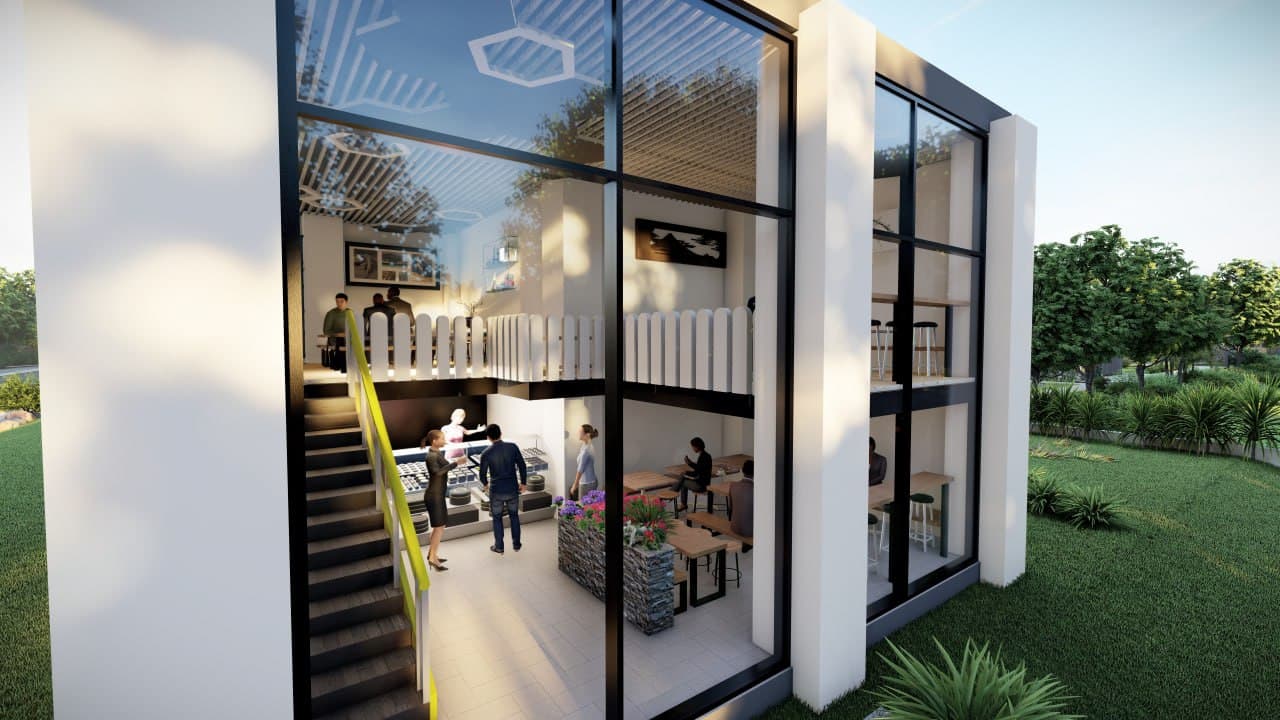
Glass Box Cafe explores transparency as both concept and experience. The design transforms a two-story commercial building into a stage for social activity — diners become performers visible from the street, while those inside enjoy unobstructed views to the surrounding landscape.
The brief called for a destination cafe that would stand out in a suburban context without resorting to flashy gestures. My response was radical openness: floor-to-ceiling glazing wrapping two facades, making the building's interior life its primary attraction.
The result is a space that feels generous and connected — an 80-seat cafe that reads as a pavilion in a garden rather than a box on a street.
Entry sequence, service counter with display cases, varied seating zones, and the signature yellow staircase.
Design Concept
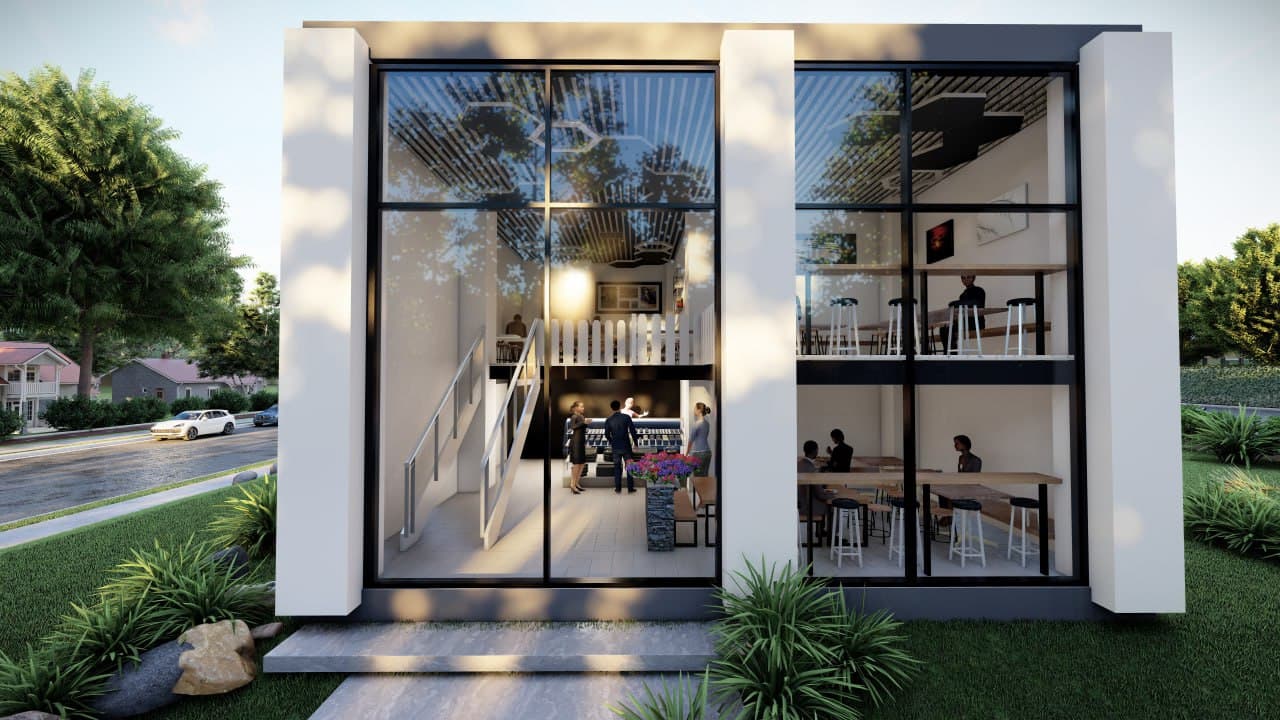
The fundamental architectural move is transparency carried to its logical conclusion. Two full facades — corner-wrapped — are entirely glazed, framed only by slender white structural piers. This creates the "lantern effect": during evening hours, the interior glows against the suburban streetscape, drawing people in.
But transparency serves more than marketing. It fundamentally changes how the space feels from inside. Seated at any table, you're connected to the trees, the passing pedestrians, the changing sky. The boundary between public and private dissolves.
The remaining two walls — housing service functions and the kitchen — are solid, providing necessary acoustic and visual separation while grounding the glass pavilion to its site.
Spatial Organization & Materials
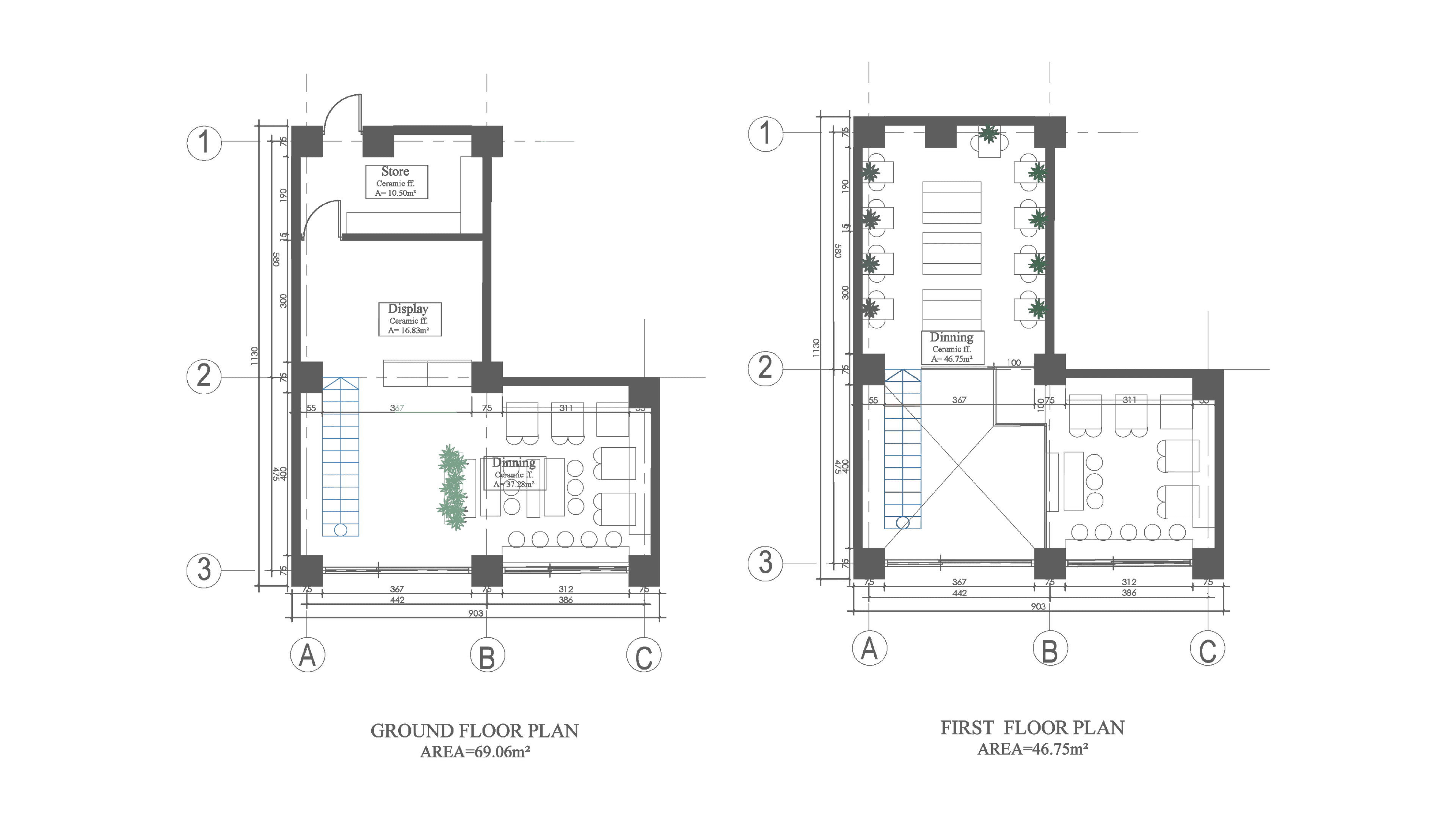
The cafe organizes vertically around a dramatic double-height void that runs the full depth of the building. This void is the spatial engine of the design — it connects the two levels visually, allows daylight to penetrate deep into the plan, and creates the sense of generosity that makes the cafe memorable.
The ground floor handles primary functions: a service counter with pastry displays, the main seating area with a mix of two-tops and communal tables, and stone-clad planters that bring landscape elements inside. A sculptural yellow staircase — powder-coated steel with perforated treads — rises through the void to the mezzanine level so guests see the vertical drama as soon as they enter.
Material choices reinforce that sense of openness. White walls and slender columns provide a neutral frame while natural timber furniture in warm oak tones adds tactile warmth. Hexagonal acoustic panels in graduated gray tones pattern the ceiling to manage noise in the double-height glass box, and stone gabion planters bring texture and landscape inside.