
Horizon Tower
Vertical density, resolved through variation
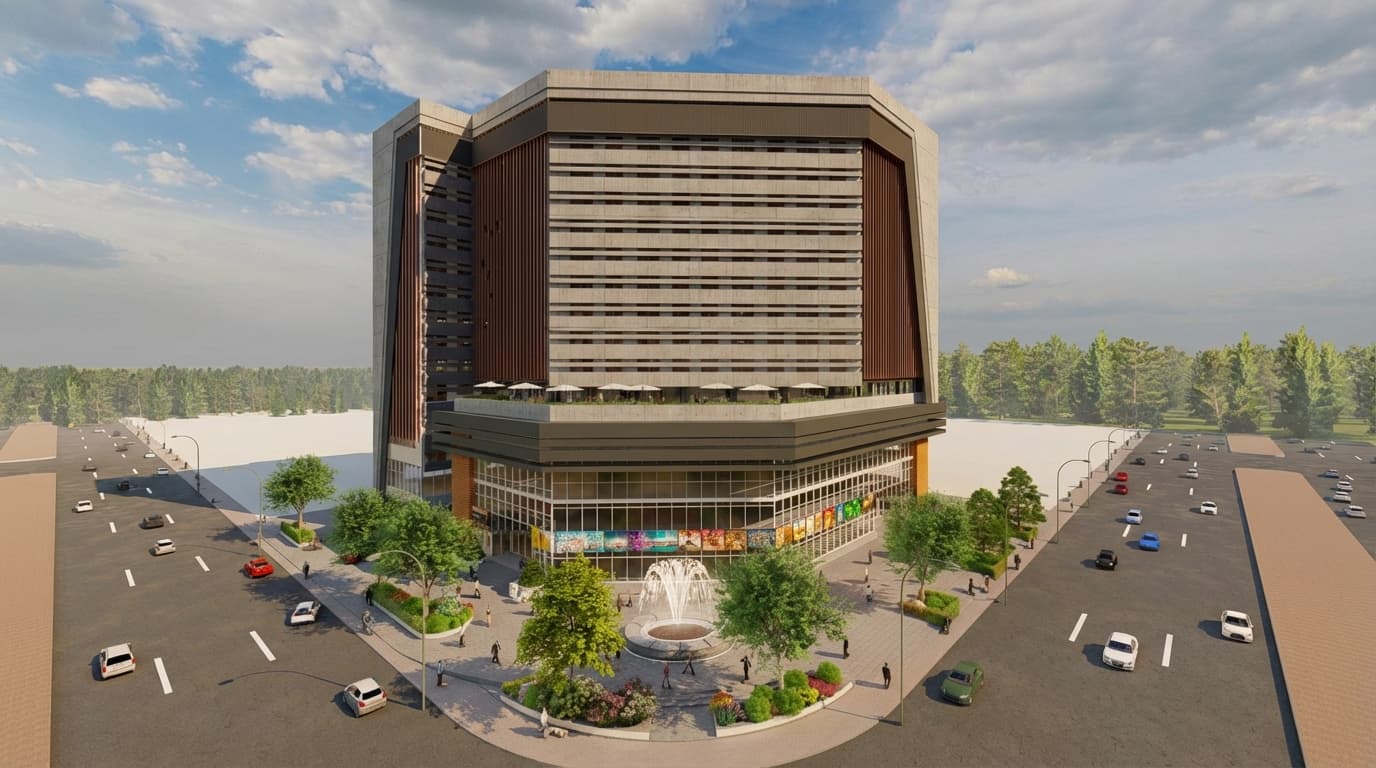
Overview
Horizon Tower addresses one of urban architecture's central challenges: how to stack radically different uses — retail, commercial, residential — into a single vertical structure while maintaining coherence, efficiency, and identity.
The project rises 15 stories above grade with three additional levels of basement parking below. At ground level, retail spaces activate the street edge. A commercial podium fills the lower floors. Residential units occupy the tower above.
This isn't speculative design. The project navigates real constraints: zoning limits, parking ratios, leasable area targets, and construction economics. The architecture emerges from solving these constraints elegantly.
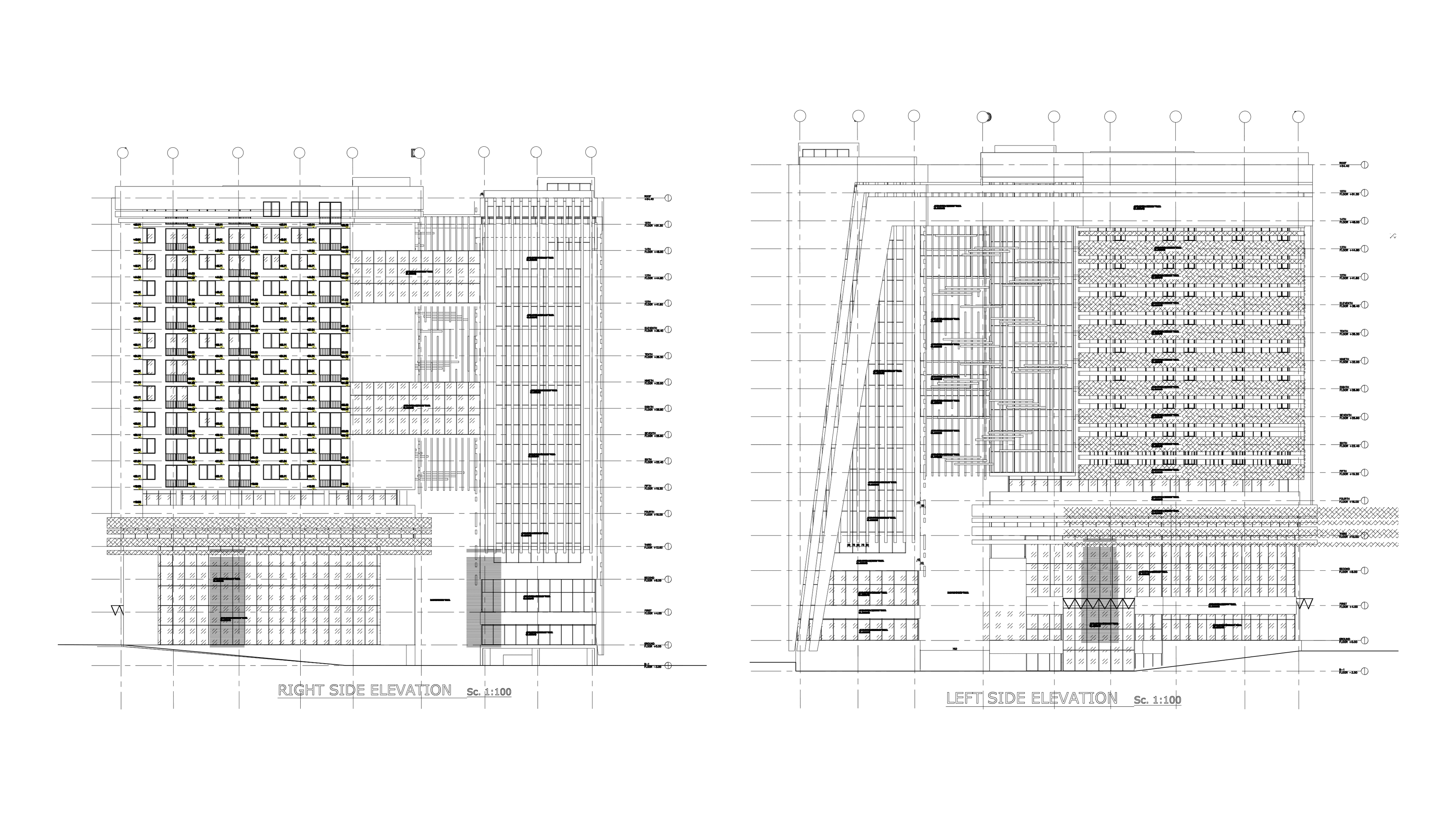
Stepped massing from podium to tower, with the residential volume rising above the commercial base.
Vertical & Floor Plate Strategy
The tower organizes into three distinct zones, each optimized for its program. Three basement levels handle parking for residents, commercial tenants, and visitors so the ground plane can remain active. The podium — ground through approximately the fifth floor — houses retail at the street and commercial space above, using larger floor plates, higher ceilings, and column grids tuned for open-plan flexibility. The residential tower (floors six through fifteen) steps back slightly, creating terraces that reduce visual bulk while giving units real outdoor space. Rather than repeating a single plate, the design tailors each level's layout to its use: transparent retail frontage and a grand lobby at grade, efficient commercial plates in the podium, and compact double-loaded corridors in the tower.
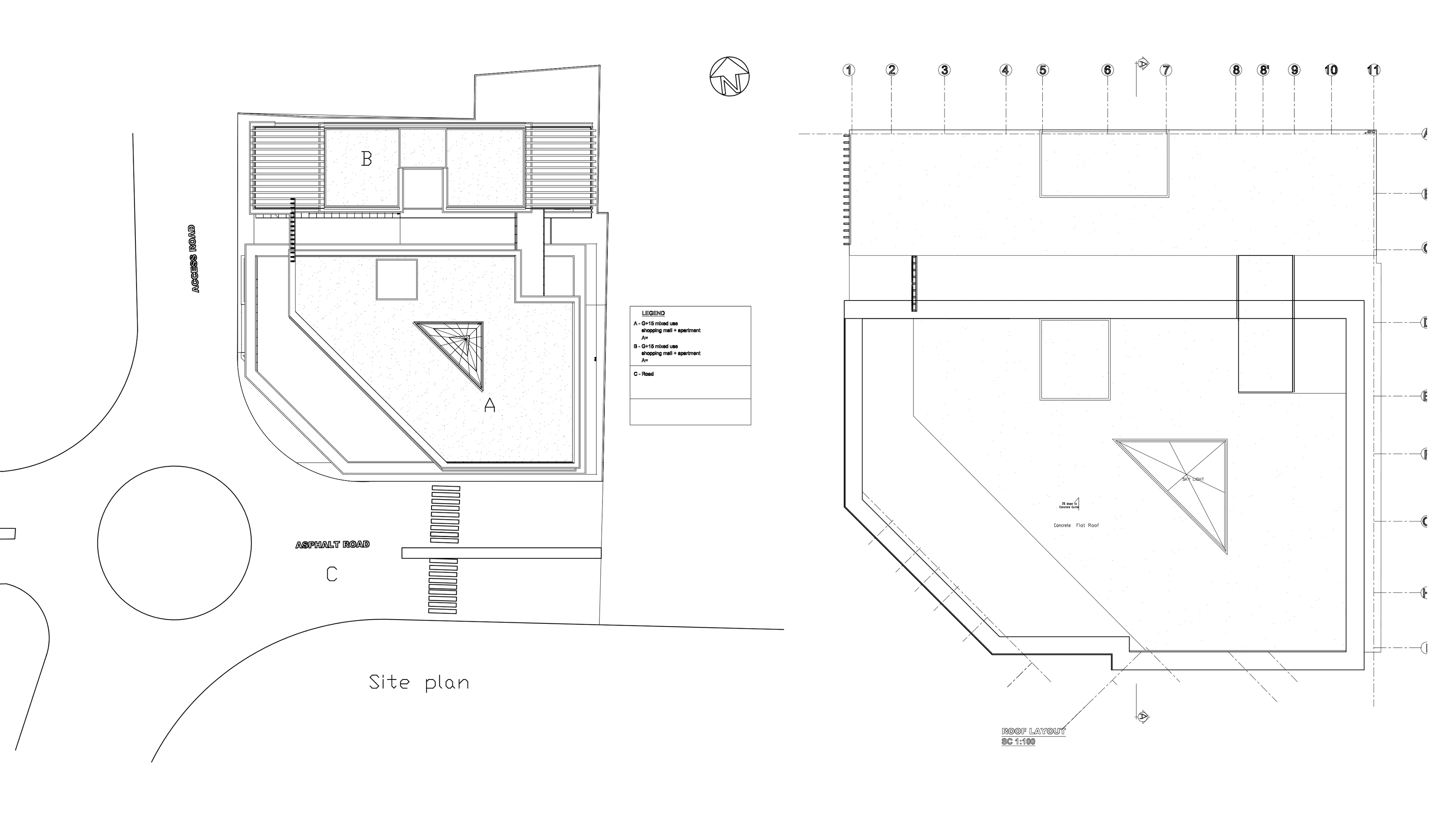
Building footprint showing the tower's urban context and relationship to surrounding streets.
Ground-Level Activation
The site strategy pulls the podium to the street edges while carving recesses that become shaded forecourts and drop-off zones. Retail wraps the most public corners so storefront glass meets the sidewalk, and landscaped setbacks soften the transitions to neighboring parcels. On the roof, amenity decks and planted terraces stitch the residential tower back to the podium mass, giving residents outdoor rooms that look across the city.
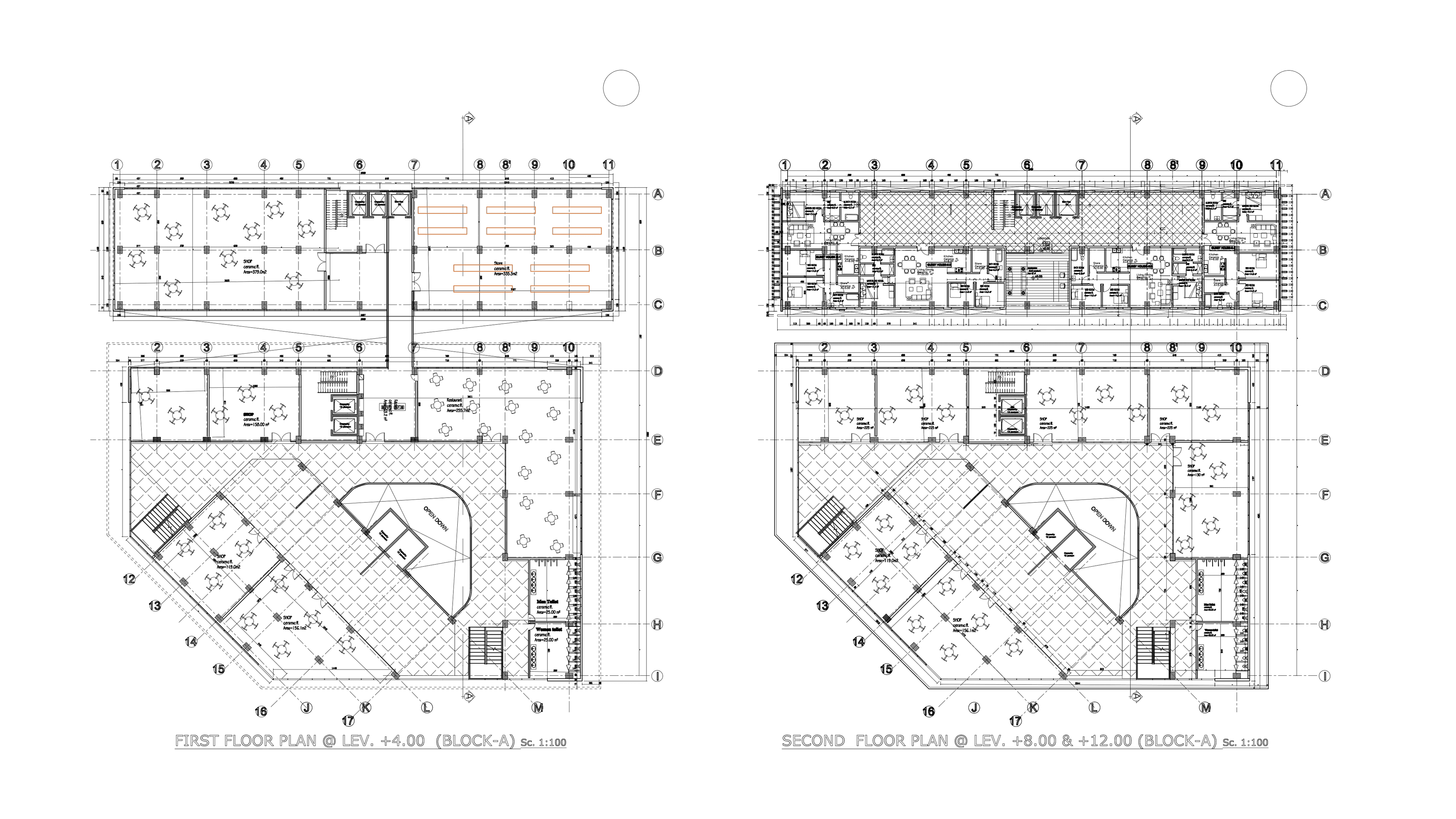
Retail storefronts, main lobby, and vertical circulation core at street level.
Mobility & Parking
Levels one and two choreograph how people enter and move through the building: retail tenants get direct frontage while residents and office users share a grand lobby tied to a central core of elevators and fire stairs. Behind the public face, service spines and loading keep operations invisible. That core continues down to the three-level basement, aligning ramps and structural bays so parking, back-of-house, and building services operate efficiently beneath the tower.
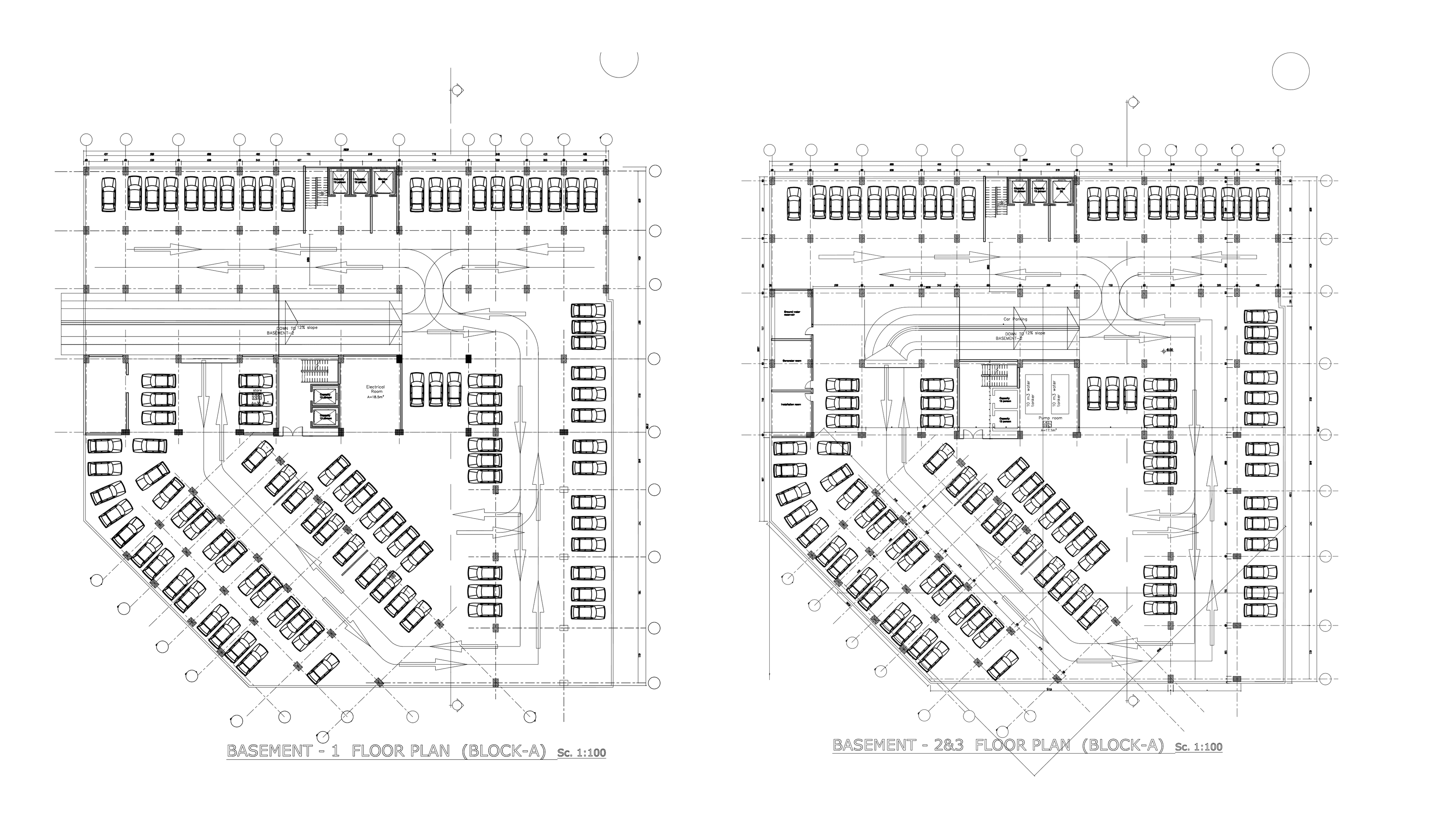
Basement parking layout accommodating approximately 200 vehicles across three subterranean levels.
Facade Expression
The tower's facade expresses its internal organization while maintaining visual coherence from street to skyline.
At the base, the facade is predominantly glazed — storefront systems at retail, curtain wall at the commercial levels. This transparency signals public access and allows the interior activity to activate the street.
At the transition from podium to tower, a horizontal band marks the shift. The tower portion employs a consistent window pattern: punched openings in a solid wall, creating the repetition that towers require to read as unified objects.
Color and material are restrained. The palette is essentially two-tone: a lighter material for the primary wall surfaces, darker accents at window frames and transition bands.